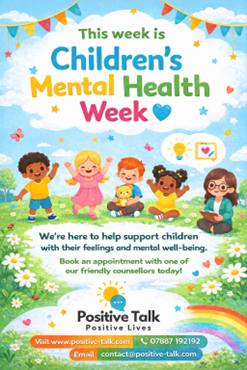
Children's Mental Health Week: 9th February-15th February 2026
Working Together to Support Young Minds
Children's Mental Health Week is a powerful reminder that mental wellbeing is just as important as physical health and that supporting young minds works best when everyone plays a part.
This week is about early support, and recognising that children can be supported and Parents, carers, schools, and wider services all form a network around the child. When that network works together, children are more likely to feel safe, heard, and supported.
Why Children’s Mental Health Matters
Children experience emotions just as deeply as adults, but they don’t always have the words to explain how they feel. Changes in behaviour, mood, sleep, or engagement can often be early signs that a child may need extra support.
By focusing on mental health early, we can:
· Build emotional resilience
- Reduce stigma around talking about feelings
- Help children develop healthy coping strategies
- Prevent small worries from becoming overwhelming challenges
positive-talk.com Creating Safe Spaces to Be Heard
Positive talk is about more than “staying positive.” It’s about:
- Listening without judgement
- Validating feelings, even when they’re hard
- Encouraging children to express themselves in their own way
- Reassuring them that it’s okay to ask for help
- Getting support where they need it to thrive and enjoy the world
Simple phrases like “I’m glad you told me, ”or “ That sounds really tough” can make a huge difference. When children feel believed and supported, they are far more likely to open up.
Parents, Guardians, and Carers: The First Point of Call
For many children, parents, guardians, and carers are the first and most trusted source of support. You know your child best their routines, personality, and what’s “normal” for them.
You may notice:
- Changes in behaviour or mood
- Withdrawal from activities they once enjoyed
- Increased anxiety, worries, or emotional outbursts
- Difficulties with sleep or concentration
Trust your instincts. Seeking advice or support early is not a failure, it’s a strength. Reaching out shows children that their mental health matters and that help is available.
The Role of Education Settings
Nurseries, schools and colleges are also key in supporting children’s mental health. Education settings often:
- Notice changes in behaviour or learning
- Speak to the child’s support network to establish changes and moods
- Support referrals to external services when needed
Open communication between families and education settings is essential. When adults share concerns and observations, children receive more consistent and effective support.
Areas We Can Work On Together
Supporting children’s mental health is a shared responsibility. Key areas we can focus on include:
· Emotional literacy helping children name and understand their feelings
· Confidence and self-esteem encouraging strengths and celebrating effort
· Coping skills teaching healthy ways to manage stress and emotions
- Routine and stability creating safe, predictable environments
- Early intervention addressing concerns before they escalate
Everyone Working Together
Children’s Mental Health Week reminds us that no one has to do this alone. When parents, carers, schools, and support services work together, children benefit from a united, caring approach.
By talking openly, listening closely, and supporting one another, we help children grow into emotionally healthy, resilient individuals not just this week, but every week.
If you’re concerned about a child’s mental health, reach out. children-counselling
Support starts with a conversation, and that conversation can change a life.
https://www.tiktok.com/@positivetalkltd/photo/7605166023536364822?is_from_webapp=1&sender_device=pc